


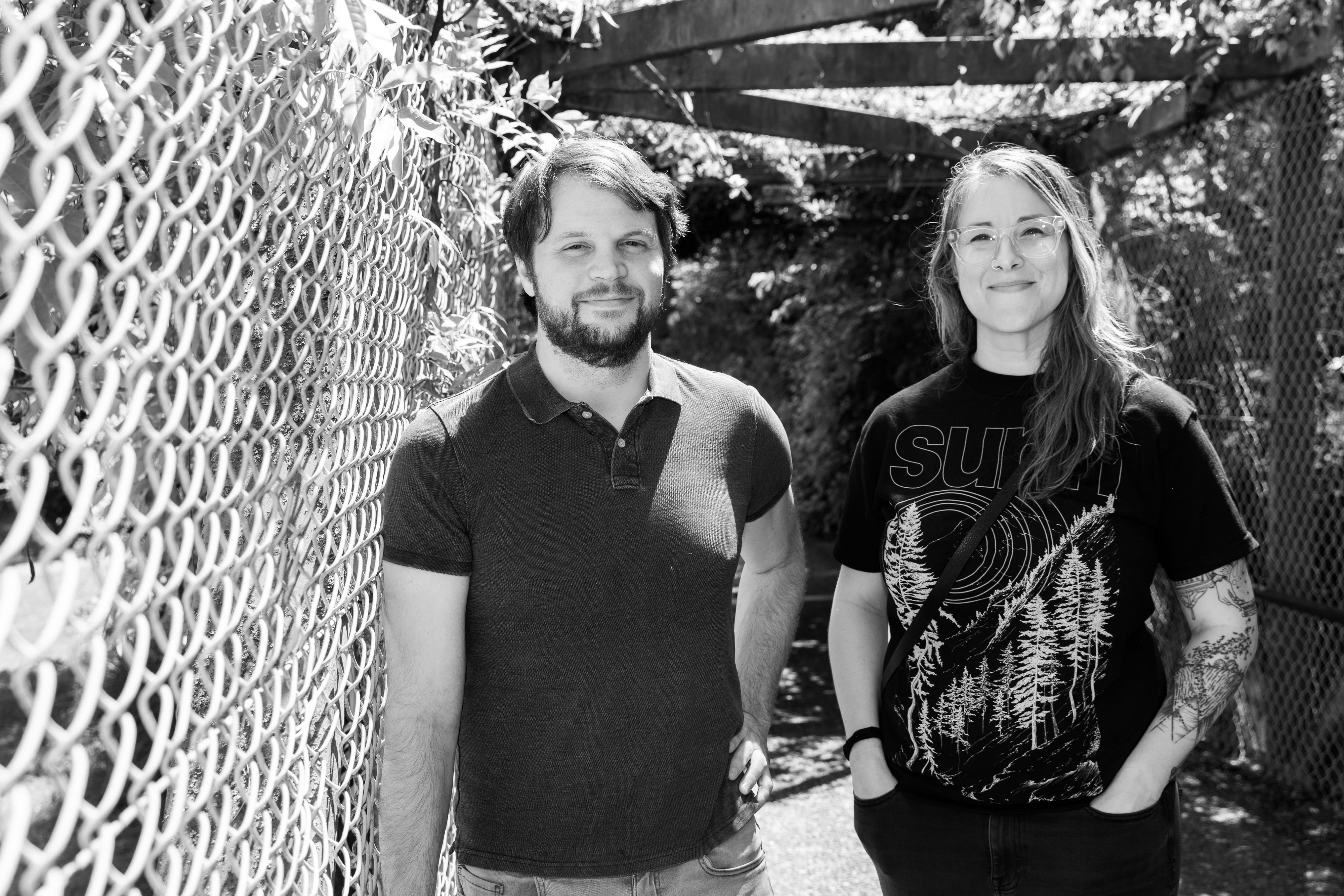
Six months ago, we lit the fuse of The Western Edge and launched it up into the sky: a hope and a prayer that we could create a news outlet free from some of the problems plaguing media, and a belief that a venue devoted to investigative journalism in the Pacific Northwest would be supported by readers.
We came to the project under duress. After 13 years in public media, Ryan Haas was motivated by the degradation of Oregon Public Broadcasting, helmed by executives who make up to $34,000 every month, while some journalists employed there take second jobs to help pay their bills.1 Longtime independent journalist Leah Sottile subscribes to the idea that deep-dive, investigative journalism can do good in the world, but she’s also holding out hope for stability in a rocky profession.
The promise of The Western Edge is simple: keep a laser-focus on reporting overlooked stories, and pay for that reporting with subscriber dollars. We are quite literally two people, and know that one of the biggest issues facing media today is the temptation for journalists to wear too many hats. When journalists are asked to be social media content creators, vertical video editors and clickbait producers, they make more content and less journalism that moves the needle. With The Edge, we’ve tried to remove those pressures and focus on what we are good at: reporting.
Six months in we have been inspired and heartened, and also learned hard lessons. We believe in transparency, and that the only way we can create a new way in modern media is to be up front with our readers about what the business of starting something new looks like.
So here’s a state of The Edge: the things we’ve learned, the things we’ve accomplished, where we’re going, and how your help can get us there.
People want media, but they don’t necessarily want to or have the ability to pay for it. As journalists, that’s a tough pill to swallow; as people with bills to pay, we get it. There are only so many media outlets any one person can afford. We also understood when we launched this outlet on Substack — for better or for worse — it would come with risk. The idea was that we would start here, build a following from Substack’s large, captive audience and decamp when we had enough subscribers to financially sustain our own website. So far, leaving this platform has not yet become possible. We have provided the option for people to donate to our operation, and go around Substack. Few people have taken us up on that option.
Reporter Scott Carney has written how Substack’s model is cannibalizing itself, and is failing to help the very creators it depends on for business: “As the platform promotes more and more free content,” he writes, referring to Substack’s social media product, Notes, “users have less and less incentive (and time) to engage with the more thoughtful higher quality content that lives behind paywalls.”
For now, we remain on Substack. The goal is to leave, eventually, but that feels far away given the financial reality it would take to design, maintain and host our own site.
Many readers only know information to be free. Which is problematic for independent outlets like ours. Recently, labor journalist Hamilton Nolan wrote about how everyone currently alive on the planet is used to getting information for free, or cheap. All people are used to journalism being subsidized by advertising, but that model has gone extinct. AI is gobbling up website traffic by quickly summarizing stories and incentivizing readers to never visit the original source. “The public demand for journalism still exists, and the civic need for journalism still exists,” Nolan writes, “but the economic model that made it possible to have the number of journalists necessary to provide the level of news coverage that the public was used to in the 20th century has been utterly smashed by big tech.”
Very directly, as of this writing, The Western Edge has 2,099 subscribers, and 232 of you are paid subscribers. The good news is that 232 paid subscribers is quite high, and shows us just how valuable the information we’re putting out is to you. The bad news is that for this project to be sustainable long-term, each month we need hundreds more people to become paid subscribers. Right now, our paid subscriber rate increases, on average, by about one or two per month. We’d love your feedback on what we’ve produced so far — click the button below to take a very easy, brief survey.
Our paid subscribers and patrons are a godsend. When we launched this venture, we were overwhelmed by the sheer number of people who put their hard-earned cash behind this project. We were even more shocked when several of you decided to donate far above and beyond the cost of an annual subscription.2 Our investigations take time and, as we all know, time is money. But also: Public records are money. Travel costs are money. The cornerstones of our work take money.
We also understand that not everyone can afford to pay. We want as many people to read our stories as possible, so this message is for you free subscribers: if you can’t afford to pay for our stories, please think about sharing them on Bluesky, reddit, Facebook, Instagram, LinkedIn — wherever. Share with your book club. Tell your neighbors that there’s this scrappy news outlet in town run by two very-tired-but-tireless reporters. Those referrals matter so much, and help us build a stable of future subscribers.
Pro: we are just two people. Being small and nimble was a major goal of ours when we started this project. For several years, we’ve worked together as a team in slight isolation; even while working on Bundyville and Hush, we were left to our own devices, reporting, editing, producing, scoring and mixing our own work without much scrutiny. We work fast, and we get a lot done. We’ve continued that work ethic with The Edge. That has been a benefit to our journalism and, consequently, our readers. Our small size keeps the journalism as pure as possible, without influence from executives who might have an interest in rounding the sharp edges off investigative reporting.
Con: we are just two people. The cruel reality of this project is that it does not pay our bills. We love making journalism, and from time to time, we come up for air and remember that — no matter how fulfilling the profession can be — it is labor. The journalism industry has long capitalized on the fact that many reporters think of their work more like a calling than a profession. Most reporters do this work for little money. Our career paths have proven that we are no exception to this rule. However, things change when you own the business. Until this business builds more, and we get more subscribers, we are dependent on non-Western Edge work to pay our bills. We’d love for that to change.
When The Edge strikes, our readers are thrilled. Our stories have gone viral, and attracted attention across the media climate. There are many fantastic investigative journalists across the Pacific Northwest, but our position is that there are not enough of them. The Edge has tried to look at communities and issues that some of those other reporters haven’t had the time to get to.
Right now, we have several new stories cooking away on the burners. While we finish them up, and as summer comes to a close, it seems like a good time to catch up on what you might have missed. Maybe you will see something here that will make you want to subscribe.
‘Give Your Mind Over’: Power and Devotion Inside Oregon Buddhist Communities

The Western Edge is a journalist-owned media outlet devoted to investigative reporting in the Pacific Northwest. We are one-hundred percent powered by reader subscriptions. For $10 a month, or $110 p…
In July, Sottile published “‘Give Your Mind’ : Power and Devotion Inside Oregon Buddhist Communities,” which looked into sexual assault allegations inside two spiritual communities — one in Portland, and one outside Eugene. It’s a look behind the veil of communities that project a visage of enlightenment, but are much more complicated behind the scenes.
Sweaty, Stuffy and Loud: Inside the Amazon Warehouse Where Jim Wetmore Died

The Western Edge is an independent publication supported entirely by our subscribers. The type of investigative journalism we do is tough, fair and gets results — but it also takes financial support …
After hearing about the death of Amazon worker James Wetmore on the floor of the PDX9 warehouse, Haas followed up with a thorough investigation into the facility. What he revealed was a stiflingly-hot work environment, a history of medical calls to the facility and a family left with so many questions about what happened to their loved one. A critical read.

In May, Sottile released “The Age of No Innocence,” which grapples with the reality that college-aged Americans barely recall a time before President Trump, or a time when extreme politics was abnormal.
And throughout June, we gave the video thing a shot. Turns out, you can teach old dogs new tricks. In this series, we go back to Bundyville — the first project we worked on together — and revisit how the Patriot movement and the main characters from the Malheur occupation have changed and found new power in the past decade.
In OPB’s 990 tax filing for 2024, the most recent accounting available, CEO Rachel Smolkin took home a salary of $406,656. Former CEO Steve Bass worked as a consultant that year, which was Smolkin’s first on the job, and took home a paycheck of $633,006. In total, executive compensation at OPB was just shy of $3 million in 2024, or around 5% of the $54 million in contributions and grants the media outlet received.
Nolan has also written, astutely, that patrons who can afford to pay more than the average subscriber are one way forward in journalism.