

The Age of No Innocence
What if all you knew was extremist politics? Welcome to being young in America.

The Western Edge is an independent publication supported entirely by our subscribers. The type of investigative journalism we do is tough, fair and gets results — but it also takes financial support to continue. If you believe in the kind of shoe-leather journalism we do, please consider helping us keep this type of work alive in the Pacific Northwest by becoming a paid subscriber. Thank you!
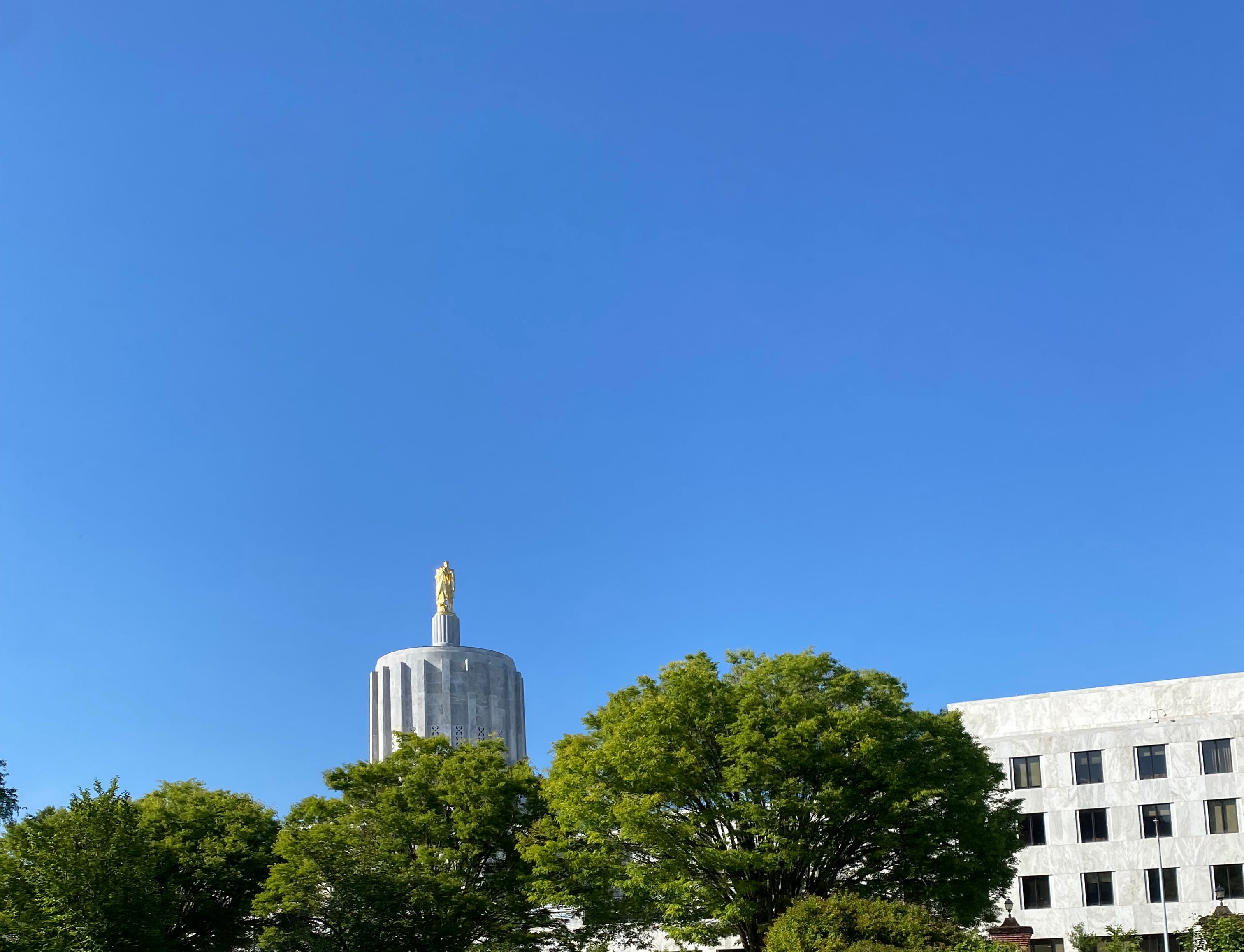
One hundred and forty feet up, atop the dome of Oregon’s State Capitol building, stands a gilded man carrying an axe. A gleaming pioneer painted in flakes of 23-karat gold, people call him “Gold Man.”
In years past, as statues across Oregon were pulled down — from a racist newspaper publisher, to more than one white pioneer, to many a US president — Gold Man has remained, unreachable. He presides over a state built after the murderous removal of Indigenous people from their lands, presumably by the sort of men that Gold Man is meant to embody. He is a perfect representative: to be Oregonian can mean pride or shame, or rationalization, or even turning your back to the hard history of this place.
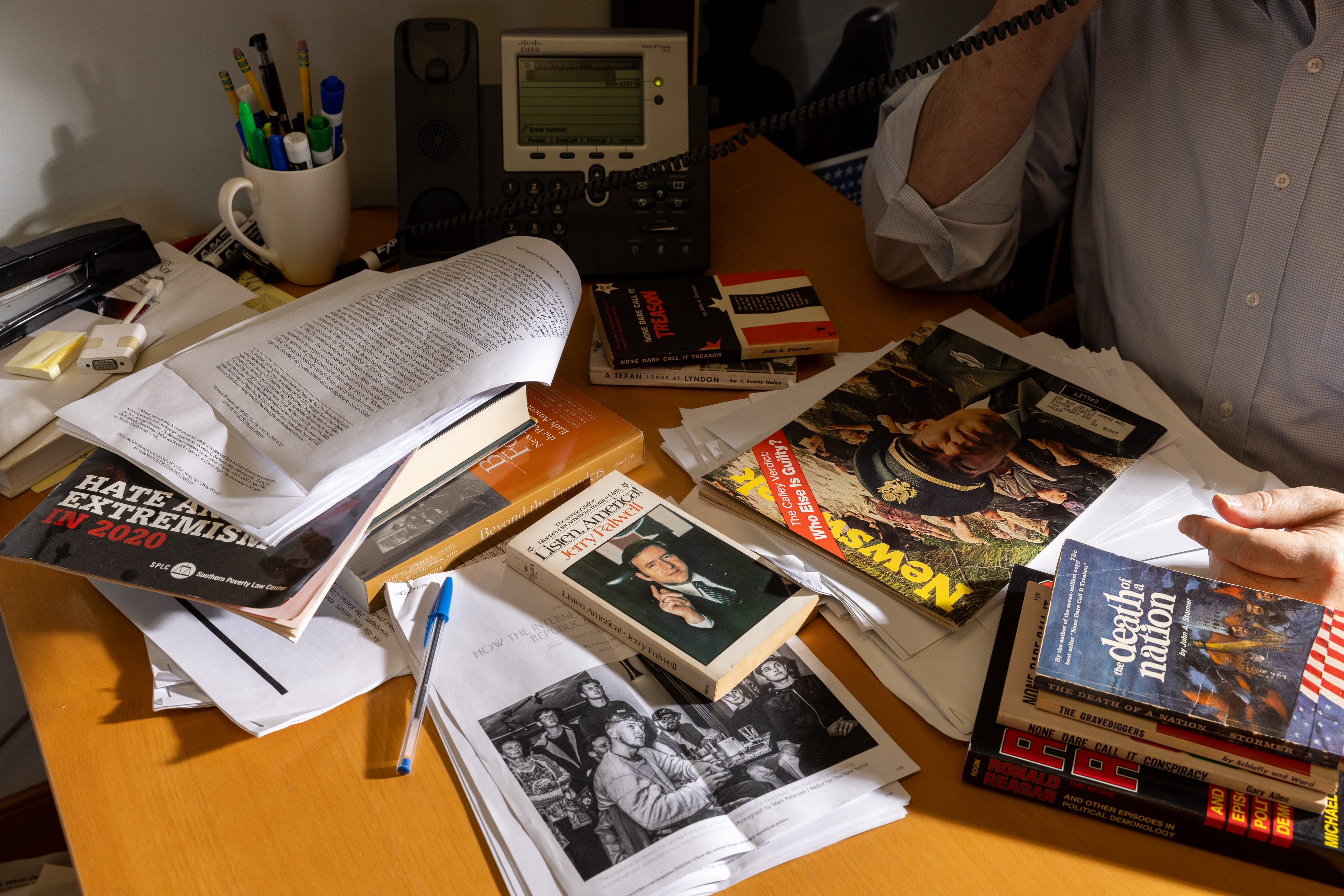
One bright afternoon last February, just over Gold Man’s shoulder inside a Willamette University building across the street from the Capitol, professor Seth Cotlar and his students were looking straight at a different hard history.
Cotlar dimmed the lights.
“I thought maybe we would take just a couple minutes to watch George Wallace,” he said, hitting play. Black and white footage rolled: a 1964 speech by the segregationist governor of Alabama and three-time presidential candidate.
In a southern drawl, Wallace plainly told a crowd at Ball State University that the recently-passed Civil Rights Act was, in his estimation, a ploy by the federal government to meddle in how states ran schools. He painted a portrait of a country in disarray, where prayer was being banned from classrooms.
Cotlar paused the video. What did the students think?
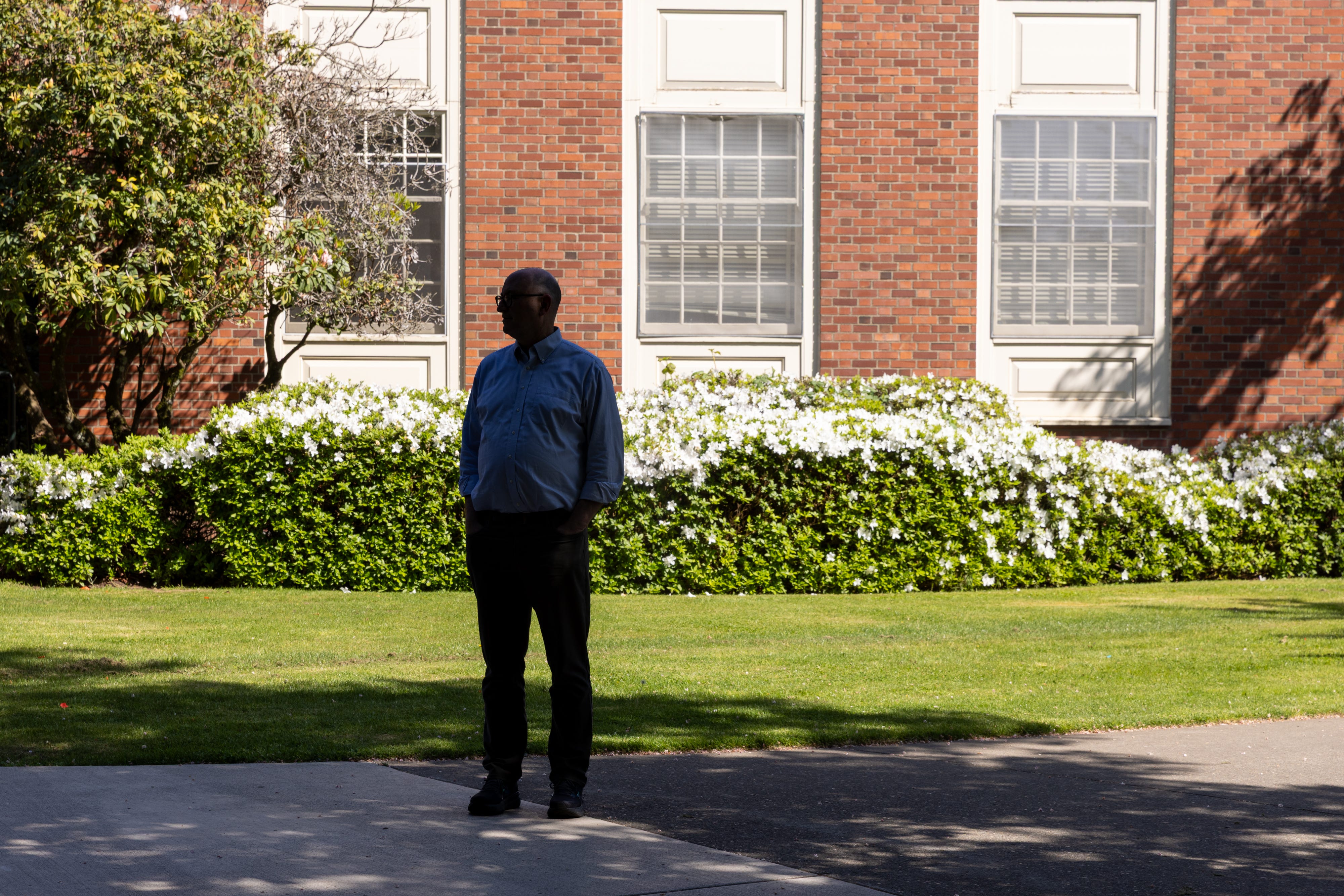
This is History 221, The Far Right in America: 1920-2020. For a semester, students immersed themselves in an examination of America’s most ultraconservative political groups and figures, from the Ku Klux Klan, to the John Birch Society, to neo-Nazis, to the far-right creations of the modern political moment, like the Patriot movement and the embrace of Christian nationalism.
“Some things that stood out to me was just how much I could kind of hear Trump in it,” a junior named Ava said of Wallace’s speech. “Where he’s like, ‘you know what we’re not allowed to even do anymore? We’re not allowed to pray in school.’”
“Who might be behind taking Christian prayers out of schools, do you think?” Cotlar asked.
“The communists, of course,” an 18-year-old student named Katie said.
There were chuckles.
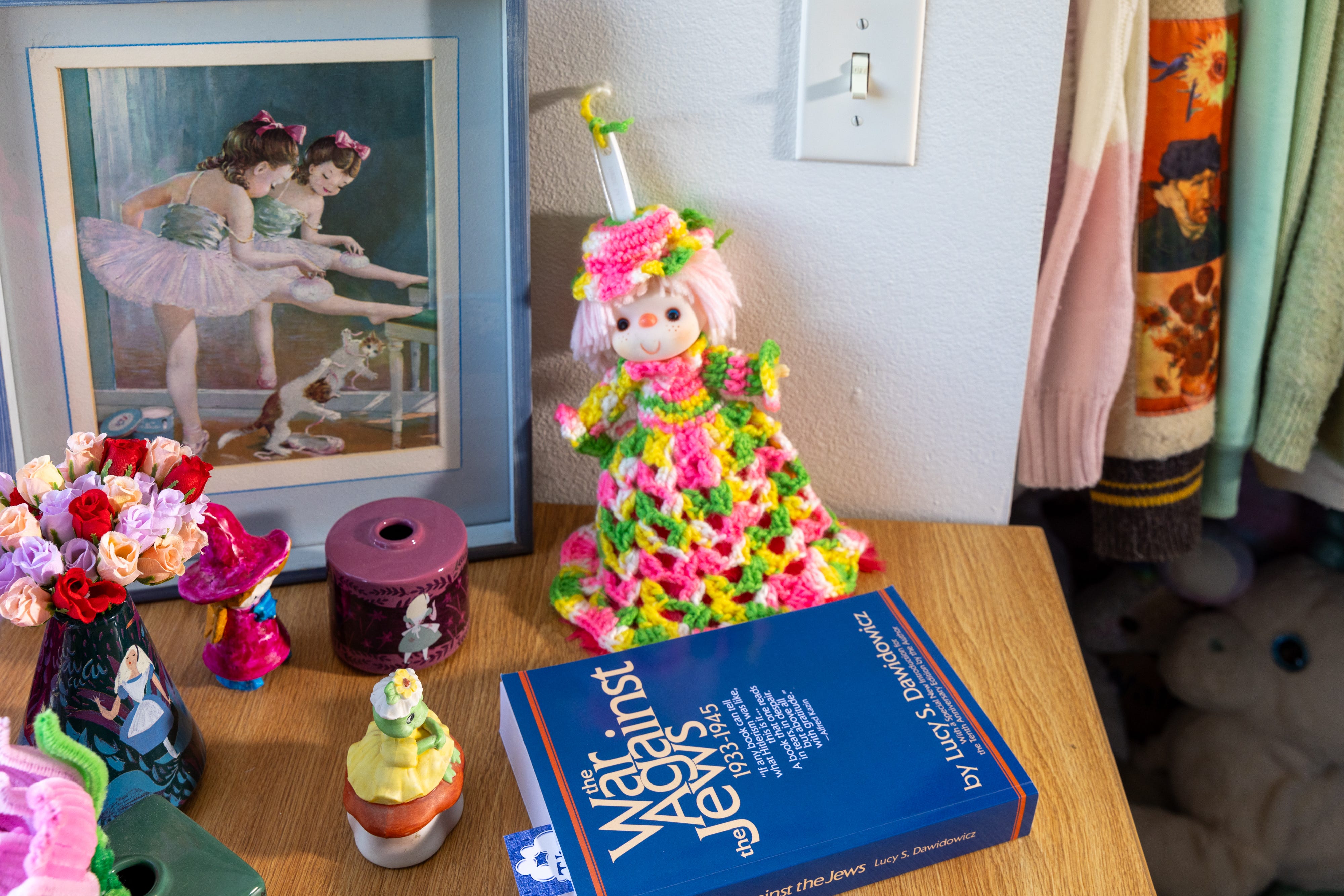
“The Jews,” Ava offered; Cotlar’s students were, by that point, overly familiar with the ways antisemitism has been a constant, catalyzing point among the far-right.
Cotlar pushed his students: Wallace never explicitly named communists or Jews as the reason prayers weren’t being said in school. Why were they going there?
Because of who Wallace sounded like. “The growth of centralized control over every aspect of life gives Kenneth Goff,” Katie read from her notes — miraculously combining the slang of a modern teenager with a reference to an obscure minister of Christian Identity — an ideology that preaches Jewish people are the spawn of Eve and Satan.
Libi, a 19-year-old, chimed in. “There’s an interesting ebb and flow where you see the Asa Carter come out,” she said, nodding to the violent Ku Klux Klan leader who was Wallace’s speechwriter.1 “Like, ‘I don’t want to appear too crazy, but I’ll put the idea out there.’”
“Right, yeah,” Cotlar said. “‘I support the federal government. But they want to control every little aspect of your life.’”
In an interview, Cotlar said the point of teaching a class on the history of the far-right in America is not to explain modern politics or President Trump. He came up with the idea for the class while giving a course on the history of conservatism.
“The Tea Party stuff was just starting up,” he said. One day in class, a student raised his hand. “His question was like, ‘why are these people so stupid?’”
Cotlar was surprised — put off by the student’s anti-democratic tone. “Do you want to understand them or do you just want to feel superior to them?” he remembered thinking. It felt like an attitudinal shift from how his generation thought about people with different politics than their own. He figured if students knew more about history, the Tea Party’s emergence would make sense.
In explaining America’s far right past, Cotlar found his students more and more often drawing connections to the present. “The resonances are so obvious,” he said. “The idea is that history does help us understand our present moment, but it can only help us understand it if we take it on its own terms. So if you’re just using history to score points in the present, you’re not actually doing history. You’re just selectively using history to talk about the present. … It’s not education.”
The class has led Cotlar to notice stark differences in how he and his students view this history.
“It becomes more and more taxing to believe in a livable future. When I imagine my adulthood, I don’t see anything worthwhile.” — Ava
Cotlar is in his 50s, and for most Gen-Xer’s lives, people like George Wallace were considered fringe, “a product of this past — this racist or bigoted past,” he said. They were a part of the political landscape Americans shrugged off, a fringe with ideas that might die off with the people who held them.
“That was a source of comfort and it turns out it was false comfort,” Cotlar said. “For this generation of students, that way of making sense of it just doesn’t land with them at all.”
It doesn’t land because the only politics they’ve witnessed have been dominated by Trump, the first president they can recall.
Over the course of the semester, I spoke to several of Cotlar’s students about coming of age in a world where extreme politics are a normalized, constant presence. I wanted them to speak to me honestly and candidly, and so each is referred to by either their first name, or a pseudonym. None remember Trump as a man in trashy tabloids or through a cameo in Home Alone 2. For as long as they can remember, he has been an untouchable golden man who spouts racism and conspiracy theories, and who sets the tone of all political discourse in America.
What is that like? To grow up in a world dominated and shaped by far-right politics and not know any different? What does that do to your perception of the country you live in, and your concept of the future?
How does it feel to learn that Americans long turned their backs on the far-right, thinking it would simply go away?
Ava heard Donald Trump’s name for the first time on YouTube. She was 10, watching a video on the game Minecraft, which appeals to young gamers and involves mining for building materials.
The video asked: What if Donald Trump was a Minecraft player? A blocky, pixelated cartoon Trump in a suit and red tie created a wall snaking across a green landscape. He “built a wall to keep out the monsters,” Ava recalled. “I remember going to my dad and being like, ‘In this video, he built a wall!’ And my dad’s like, ‘No, he actually wants to do that.’”
The presidential election trickled into Ava’s sixth grade classroom, where kids squabbled over the candidates: Trump and former Secretary of State Hillary Clinton. “One girl was like, ‘Trump is great, he wants to keep immigrants out.’ And she’s 11,” Ava remembered. Teachers instructed the grade schoolers to stop asking each other who they would vote for if they could.
Ava described Trump as a looming presence throughout her life. When the Access Hollywood tape made headlines, in which Trump said he could grab women “by the pussy,” she was 11. “It was outside my realm of understanding but I knew he wasn’t good,” she said.
She has a vague memory of the Unite the Right rally in Charlottesville, Virginia, where torch-wielding white men chanted, “Jews will not replace us.” Ava was 12 when it happened. Her father is Jewish; she celebrates Hanukkah and Christmas.
“I was very angry because of how stupid everyone was. Because I’m Jewish — I’m ethnically Jewish. But they’re like, ‘Jews will not replace us,’” she said. “I’m like, ‘What are you talking about? That’s not a thing.’”
Nine years later, she is acutely aware that antisemitism is very much a thing.
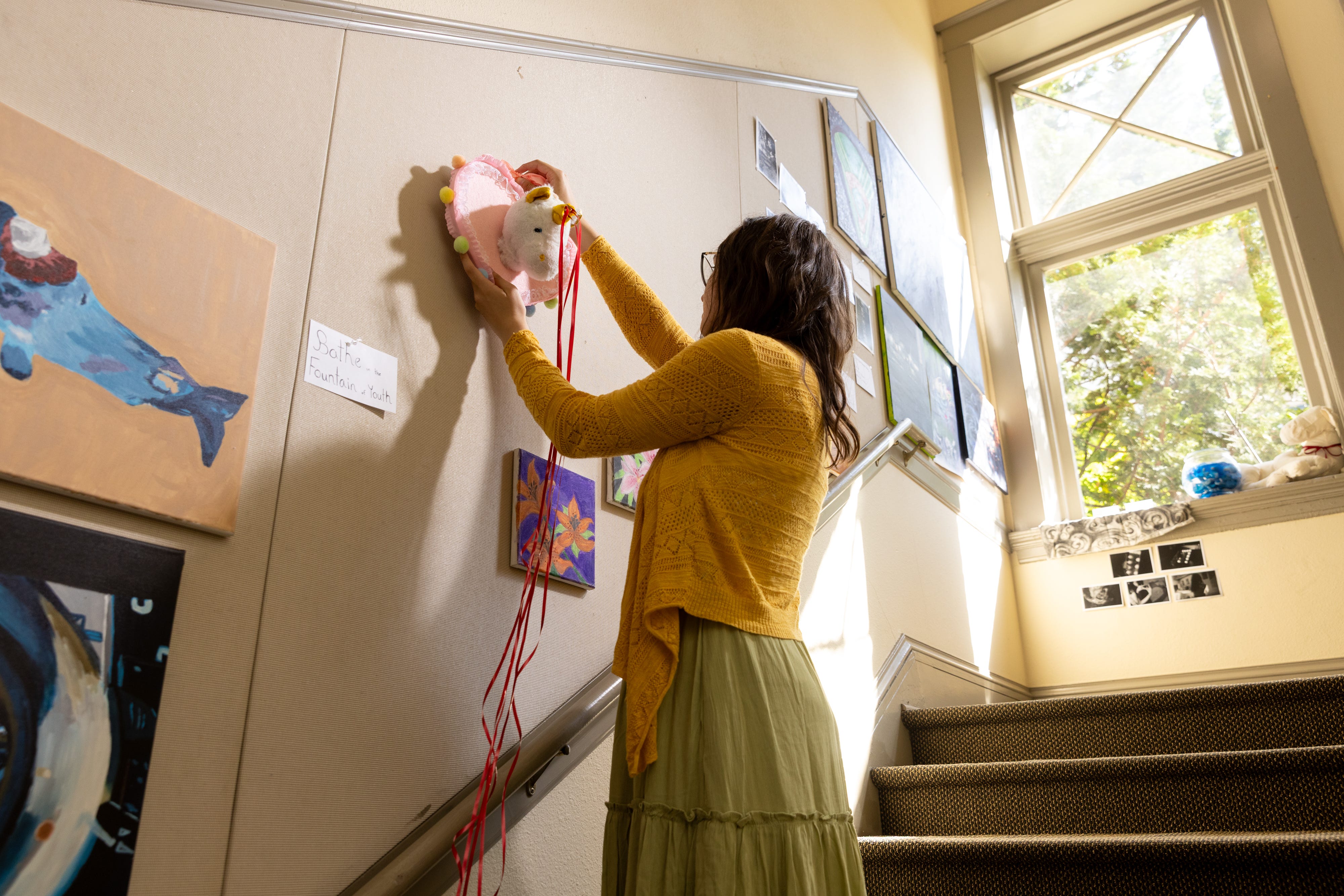
Ava is 21 now, majoring in art at Willamette. She wears glasses, pastels, jeans embroidered with flowers. One day, we sat on a couch on campus, and she showed me the messages she’s received on Instagram for having a Star of David on her profile.2
As Israel has waged a genocidal assault on Palestinians, strangers sent her direct messages calling her a Zionist. “I can be Jewish without wanting Palestinians to be killed,” she said. “Like, I don’t fuck with Israel. That’s not my place, man. And they — no matter what I said — kept hammering it in.”
Instead of just blocking them, she asked her dad to help her write a response. “It’s easy to blame Jews or whoever else for your problems, but ultimately it’s you,” she replied to her trolls. “You are the cause of your own failures and deflecting blame for your sad little life only keeps you stuck in hatred and hopelessness.”
Eventually, she had to block them anyway.
Taking the brunt of hate online is part of the reason Ava signed up for Cotlar’s class. “If I get the chance to learn about people who think, for instance, that fluoride was a Jewish plot to mind control people, I’m going to learn about that,” she said.
In class, she can detach herself from reality — read, discuss, study the ways the country cast the far-right as an inconsequential fringe. But when she isn’t in class, she can’t help but feel overwhelmed by the ways this brand of politics seems to be dictating her future. Optimism feels impossible.
“It’s just a mess and it’s just numbing after a while,” she told me one day in an email. “It becomes more and more taxing to believe in a livable future. When I imagine my adulthood, I don’t see anything worthwhile.”

When I asked what it was like to grow up in a world where extremism is the norm, several of Cotlar’s students brought up school shootings.3 Most began shooting drills in grade school. The killing of American children has been a steady rhythm throughout their lives, a massacre meted out several bodies at a time.
“I’m just very used to gun violence and mass shootings against marginalized communities and children,” Salem, a senior from Colorado, told me. “I’ve been a public school student in America.”
“There has not been a year in my life that there has not been a major school shooting,” said Emma, a 20-year-old from Idaho.
One of Emma’s earliest memories of school shootings was in the fourth grade, when her teacher explained how a shooting drill would go. Her teacher — whose own children were enrolled in the elementary school — said once the door to the classroom was locked, it shouldn’t be opened until police said it was safe.
What if their teacher’s children came to the classroom door, Emma recalled a fellow student asking — could she open it then?
“She told us that she couldn’t open the door because it could be the shooters using her daughter as a tactic to get to us,” Emma recalled.
“How did you process that?” I asked her.
“I don’t think I have yet.”
Cotlar said that over time, he’s seen his students change — that when he first started teaching at Willamette University, they were “so apolitical, it’s not even funny.” But just as often as school shootings came up in my interviews, so did political activism. Emma told me she has “walked hundreds of miles” during protests as a student: over school shootings, climate change, LGBTQ rights.
“I love going to protests so much,” Salem said. The signs, the community, the chants, the songs. He’s been going to protests since he was a kid, and loads up a backpack filled with water and snacks anytime he attends one. When we spoke, he was adding a lawyer’s contact information to his protest kit.
Salem recalled one demonstration at a church in Colorado that was public about being welcoming to the queer community. “The Westboro Baptist Church did not like that. So they came out to protest,” he said, referring to the anti-LGBTQ religious group. Salem held an umbrella with The Parasol Patrol, which “line the sidewalks and just create a barrier between the people who are going into the church and the Westboro Baptist Church,” he said.
“Making people aware that we’re here and we’re not going to just hide because they don’t like us … is really important to me,” he said.
Some of Cotlar’s students expressed guilt for protests they hadn’t attended, or anytime they tuned out the news. One said he wished he had been less engaged in his studies in high school and more politically active. Several spoke about ambitions to run for political office in their home states.
“Kids in my generation were very politicized,” said Sela, an 18-year-old who grew up in Utah. “We would have debates at the lunch table in third, fourth grade.” Kids called her “libtard.” She didn’t care: “I dug my heels in.”
In school, friendships formed along political lines.
“I don’t think I would ever be in a deep, close relationship with someone who is MAGA,” Libi told me.
But drawing those lines around differences in belief became more complicated when it came to family. Maddie, 21, grew up in Alaska in a family she describes as on the “Trump train.”
“My cousin was like, ‘You’re kind of the liberal of the family,’” she said. “That makes sense. I do go to a small, liberal school in the Pacific Northwest. I do think that people should have basic human rights and the government should be helping them with that. And I don’t like Trump.”
In 2023, she debated with her father over a drag queen story hour planned during Pride Month at her local public library. “I was like, ‘If you’re opposed to a drag queen storytime, just don’t go plain and simple,’” she recalled. “And he was like, ‘But they’re doing it in a public space. And I don’t like that.’ And I got very heated with him about it.”
Katie — a freshman — grew up in a conservative town in California. She is half-Korean, dyes her hair dark blue. As a child, her father was involved in the local Elks Lodge, and by extension, so was she. The people there were like family. As she’s gotten older, she’s come to realize most voted for Trump.
“The care they have for me, as a minority and a woman and someone with dyed hair — like I’m very obviously on the more liberal side of things.”
But she finds that care for her “disconnected from what politics they’re voting for.”
That confusion is a point of struggle: Why would people who love her actively advance policies that would negatively affect her?
In my conversations with Cotlar’s students, it was clear they were seeing political extremism as simultaneously all around them and as a phenomenon separate from themselves: a topic that could be studied and read about, and that, in some cases, might help them understand their own family.
But for one student, the class material was not a curiosity.
Watching the people in black and white footage spouting racist, antisemitic views was like looking in a mirror, reminding him of a past version of himself.
****
Tommy was 15-years-old when he first encountered mass violence.
It was March 2019. He and a friend were browsing posts on 4Chan — an online cathedral to shitposting and real-life violence — when he clicked a video. It was footage recorded by a white supremacist mass shooter as he murdered 51 people at two mosques in Christchurch, New Zealand.
“We’re just watching it over and over again,” Tommy said. “I can’t explain it, but we were just infatuated by this video.”
“I was so desensitized to it,” he said. “If I think about it now, it’s revolting.”
When we spoke, Tommy was 22. In a coffee shop a few blocks from Willamette’s campus, he set aside an 832-page book on Che Guevara when I sat down. He strained to find words to describe what appealed to him about watching such graphic, real-life violence.
“I think I also really enjoyed the idea that people were a little scared. You know what I mean?” — Tommy
He struggled as a kid, constantly transferring schools over behavioral issues. He screamed at his liberal parents, made enemies at school. On 4Chan, he found a world he described as “countercultural,” and that “totally played into my anti-authority thing,” he said.
Something about that shooting video grabbed him and took hold, leading him down a rabbit hole toward more mass shooters. He scrutinized their manifestos, brimming with hate and calls for violence. At school, Tommy started wearing a trench coat — his nod to the perpetrators of the 1999 Columbine High School shooting.4 He absorbed the Christchurch shooter’s belief in the Great Replacement Theory — a conspiracy theory that white people are intentionally being replaced by non-white populations.
Tommy hesitated when I asked if he thought about committing a mass shooting. He shook his head, looked away: “Not seriously.” That video was the beginning of what he calls his “Nazi journey.”
He and his friend had an idea to start a Nazi club, designing a logo and letterhead, but gave up after another kid called it stupid. Nonetheless, Tommy became “the Nazi kid” at his high school. On Zoom calls during COVID, his room was decorated with a Reichskriegsflagge — the Imperial German flag flown by Nazis — on the wall behind him, and a replica AK-47. His fellow students hated him; he knew that. His teachers couldn’t stand him.
“I think I also really enjoyed the idea that people were a little scared. You know what I mean?” he said. “Like, ‘Oh, what’s he going to do?’ I think it sort of gave me this perceived sense of like, not really authority…it was like bigger than I was.”
As I’ve reported on extremism, I’ve come to think the world we live in has two distinct dimensions. There is the world where we breathe air and walk on solid ground, sleep in a soft bed, consume food and water to stay alive. It is the world of interaction and social cues and the collisions of 8 billion people as they move about the planet. There is much extremism in this part of our world, and that’s where I report. Or try to. I speak to people in person, show up to rallies, look other humans in the eye.
And then there is the digital world: the dimension where so many people, including me, spend our days working, the world where we talk to friends (real, imagined), where we fill our brains with information (factual, dubious), where we create new versions of ourselves (accurate, distorted) and form opinions of others. Here, we Zoom into meetings and classrooms and court hearings and book clubs to interact with people, but never feel the warmth of human skin. It is an aromaless world meant to sell us things, where we sell ourselves, where all information must be sold and made appealing enough for a click.
In the digital world, extremism moves like wildfire across a dry forest floor. Any idea can make someone money. That’s even the case on this very website, where an extremist pushing violent male supremacist views is classified as “news.”
I push that digital world away as much as I can. I read paper books, stay logged off social media websites as much as I can, physically lock my phone in a box with a timer for hours on end. I do it to insulate myself, but I realize now that inclination is, in a sense, a remnant of my own youth, my own past where the world wasn’t so loud in my ears all the time. Young people haven’t had the mental luxury to know these worlds as separate.
“I wake up, I go to class, and I pretend everything is fine,” she said. “Apathy is better, I don’t know a more peaceful world, so in this one I will keep marching forward.” — Katie
In their lives, those worlds have merged, blended. Political rhetoric that simmers online, divorced of all empathy and civility, flows offline. Horrific real-life violence has always been available to them: a Google search away, a reality they’ve been preparing for since grade school.
At the end of each of my interviews with Cotlar’s students, I told them to email me if they wanted to talk about anything else. One afternoon, I got an email from Katie. She was still thinking about our conversation.
“When we were speaking I realized your definition was different from mine,” she wrote. “For you (please correct me if I’m wrong), extremism is rhetoric. A line that someone like Trump crossed a long time ago. But to me, extremism is violence.”
“I wake up in the morning and am greeted with death. This politician was shot. This building was bombed,” she wrote. “This school had a mass shooter. So much so, that state sanctioned violence is barely a separate category. ICE strangled a man to death, and a car was driven into a synagogue and the United States is the aggressor in another war. On and on and on, my world is nothing but violence.”
An administration fueled by extremism has promised violence against everyone she loves. How can she stop thinking about that?
“I wake up, I go to class, and I pretend everything is fine,” she said. “Apathy is better, I don’t know a more peaceful world, so in this one I will keep marching forward.”
Katie echoed the nihilism I’d heard from Ava: that it’s hard to picture a hopeful future because neither has ever known a hopeful present.
“Everything is so broken. There are no jobs, and there are no houses, and the economy and climate change. And now what was once the looming threat of war is just war,” she wrote. “We think wistfully of a permanence we will never have. To dream of the future, is to believe that you have one.”
Emma — who said she still hadn’t processed the trauma of school shooting drills from grade school — heard about better times from her parents. They tell her stories about growing up in the 1990s, about a carefree adolescence.
“I get very wistful in a way,” she said. “I’m nostalgic for a period I was never a part of.”
Their nihilism didn’t seem entirely unearned. Cotlar didn’t think so either. He pointed to the cost of living in the West, how jobs that might have otherwise gone to new graduates are being replaced by artificial intelligence. “The world they’re entering into is super dark,” he said. “It takes a degree of incredible imagination and will to imagine a better world. That takes a lot of work, given their historical framework, given their frame of reference.”
After the Zoom incident, Tommy lost access to his laptop and phone. Other students at his high school “hated me for who I was.” Tommy became acutely aware that he was on the verge of expulsion again, and had to apologize to everyone for the Nazi flag and fake gun.
Tommy retreated into reading. He has always enjoyed a big, daunting book. His favorite is Dune.5 One day, he sat down with a book at a table of students he didn’t know, and they started talking.
“We immediately hit it off. And we were just telling jokes, having a great time,” he said. During one class, they were tasked with planting trees on the school grounds. “Basically, every afternoon for a month we would just sort of go out on our own and just dig and sort of shoot the shit.”
Everyone knew Tommy was the Nazi kid, but those students never really brought it up, didn’t dwell on why he was the Nazi kid.
“I had never really experienced a social life like this before where I was doing school, where I was going to prom,” he said. “They sort of taught me how to be a regular person again.”
He got involved with the theater program, led by a Black, queer teacher. “I totally think that he saw something in me, and was like, ‘OK, let me see if I can work on this kid.’” Tommy was hired as a stage manager for a production of Romeo & Juliet, and threw himself into the job.
For the first time he could recall, he wasn’t being ostracized. He had given people every reason to push him away, but people only seemed to pull him closer.
Eventually, after enough time, he just stopped being the Nazi kid.
I asked if he could pinpoint something that changed in him; he said that’s what he’s been trying to figure out. He thinks that as he got closer to other people, he “developed a ton of empathy.”
“I think one of the biggest changes in my life is how emotional I get over things that are happening to other people,” he said. “I think I probably just grew up.”
Tommy said talking about that time in his life brings him a lot of shame; this isn’t something people know about him. Every now and then, he’ll be looking for something in his Google Drive and find some remnant of that time of his life, like the logo for the Nazi club. “When I come across them, it’s like ‘oh Jesus Christ,’” he said. He deletes the files as he finds them.
At the end of the school year, I checked in with Tommy to see how Cotlar’s class went for him. He said he noticed throughout the semester the other students seemed to hear the material differently than he did, and would immediately disregard the far-right figures they were studying.
“I’ve sort of been surprised at the level of instant disgust and disagreement with the figures that we talk about,” Tommy said. “It’s like this immediate, ‘Oh fuck this person, I hate this person.’”
He finds himself too often being willing to see political questions from any side — someone who is naive at a time when political figures are growing better at manipulating audiences.
“I’ll apply this logic to illogical racism and illogical bigotry,” he said. “Initially upon hearing it, I’ll sort of like analyze it instead of just being like, ‘oh my God, I can’t believe it.’”
It’s something he wants to change about himself. To not just give everyone the benefit of the doubt, to not always see their side. “I fall into traps really easily,” he said.
While so much of Cotlar’s course was about the ideologies that long infused US politics, his students seemed to be taking away that Americans fell into a trap when they turned a blind eye to the fringe.
“Professor Cotlar often brings up this point,” Emma said, “that violence in America has always existed since the violence of our colonization of the land, to the violence of every major political movement that’s happened.”
She told me about the 1856 beating of Massachusetts Sen. Charles Sumner, an abolitionist member of the Senate. After giving a speech criticizing slave owners, a pro-slavery member of the House of Representatives from South Carolina entered the Senate chamber and, incensed over his remarks, nearly beat Sumner to death with his cane. It is credited as a pivotal moment in the lead up to The Civil War.
“The violence of reconstruction, the violence of the great migration of people of color from the South to the North,” she said. “There is constant violence of a mostly political nature that’s happening in American history that we always kind of forget about and put a more palatable lens over, which then becomes the idea of the United States.”
As Emma told me this story — one I’d never heard before — I started to wonder who is actually innocent in America? The young people who have grown up thinking there is no hope in a better future? Or the rest of us? The adults who fooled ourselves into thinking that our nation’s violent moments were some exception, and not the golden rule of this place.
Correction: An earlier version of this story misstated Sen. Charles Sumner's title.
More stories from The Western Edge:
‘Everyone is Replaceable’: Death Rattles Oregon Amazon Facility

Editor’s Note: This story was updated Tuesday, April 14, 2026 with additional statements from Amazon.
The Shady Cop Who Haunts Halloweentown

In the foggy city of St Helens, Oregon, a tall stone courthouse backs up to the wide C…
Is Redemption Possible in Oregon's Capital City?

The thing you have to know about Kyle Hedquist — because it’s the thing everyone knows about Kyle Hedquist — is that in November 1994…
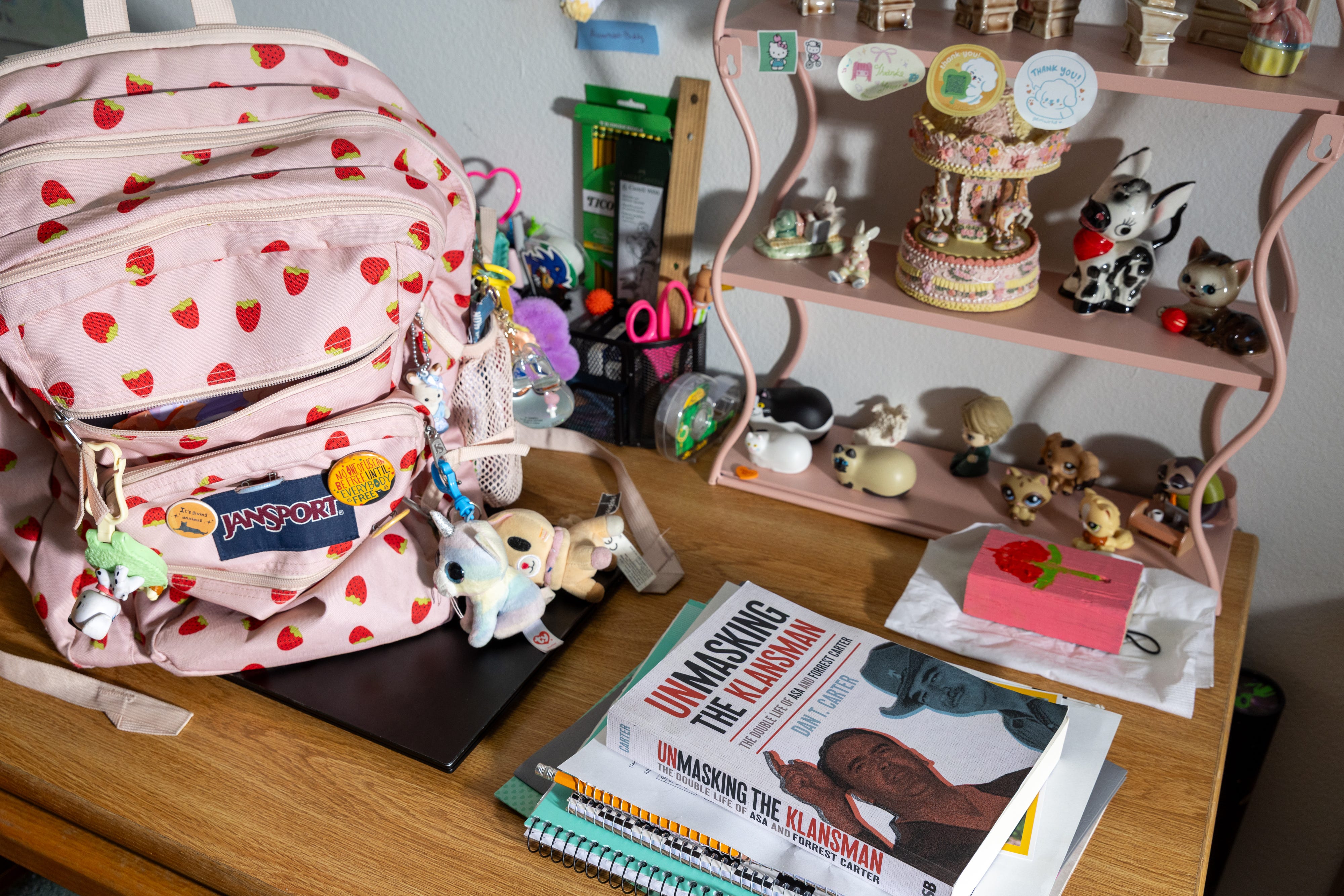
The class was, at this time, reading Unmasking the Klansmen: The Double Life of Asa and Forrest Carter by Dan T. Carter.
A student named Edward told me that during an internship in Washington DC, he realized another participant in his program was a groyper — a term used to describe followers of the young white supremacist and anti-semite, Nick Fuentes. Edward said that student shared anti-semitic memes on Instagram, but was not outwardly hateful in person. This double life — one person online, another in person — made Edward nervous. “His beliefs were so different from my own and he went to great lengths to hide them. I had trouble understanding how he thought,” he said. “He was kind of an alien mind to me.”
American school shootings far pre-date either of Donald Trump’s terms in the White House. Though an 1853 school shooting is often seen as the first in the country, experts widely agree this brand of violence became more ubiquitous after the 1999 shooting at Columbine High School in Colorado, which left 16 dead.
In the 2009 book, Columbine, journalist Dave Cullen effectively debunked that the Columbine shooters — who wore trenchcoats the day of the killings — were part of a clique in the school called the “Trenchcoat Mafia.” “None of that would prove to be true,” Cullen wrote. “But the story grew.”
Published in 1965 by Tacoma, Washington-born writer Frank Herbert, this science-fiction classic was inspired by a trip Herbert took to the Oregon Dunes, in Florence.
Really excellent, Leah
Thank you for this. I’m a ball state graduate and didn’t know Wallace has spoken there. But I’m not surprised. The things he says are things some people in Indiana really like, even 62 years later. In fact, they may like them even more.
No one should be surprised by Tuesday’s election results there. I wasn’t.