

‘Give Your Mind Over’: Power and Devotion Inside Oregon Buddhist Communities
Women inside some Northwest Buddhist centers say the faith has long struggled to stop predatory behavior by spiritual leaders, and in some cases brushed it aside.

The Western Edge is a journalist-owned media outlet devoted to investigative reporting in the Pacific Northwest. We are one-hundred percent powered by reader subscriptions. For $10 a month, or $110 per year, you keep us digging up stories all around the region. Your financial support is critical for us to take on the deep-dive stories we are known for. If you’re interested in making an additional donation to the Western Edge, you can do that. And if you want to sponsor what we do, or send us a story tip, please drop us a line.
Content warning: This story contains descriptions of sexual assault.
The 160-acre swath of flowering meadows, clear creeks and dense woods seemed special, like a place where someone really could find enlightenment.
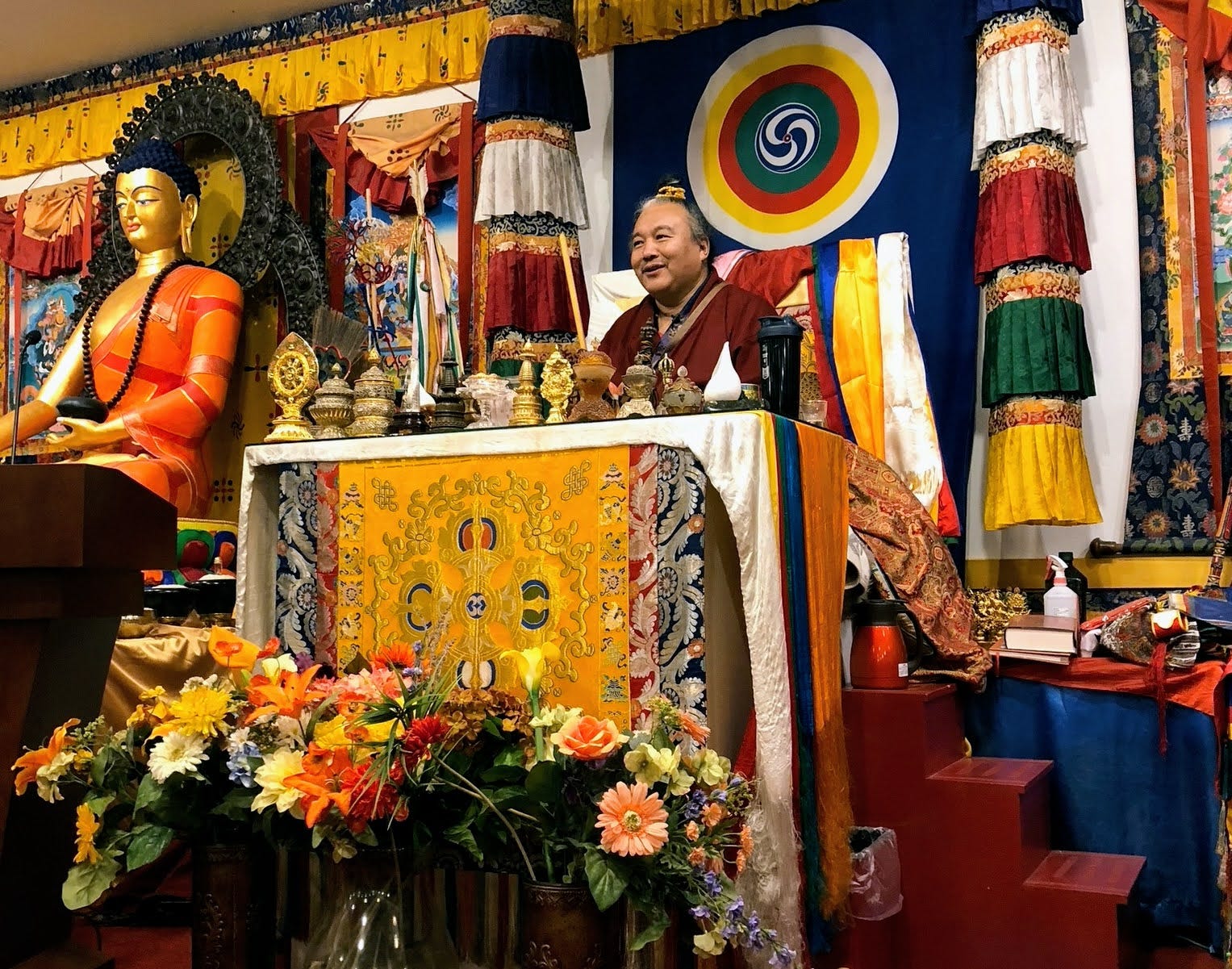
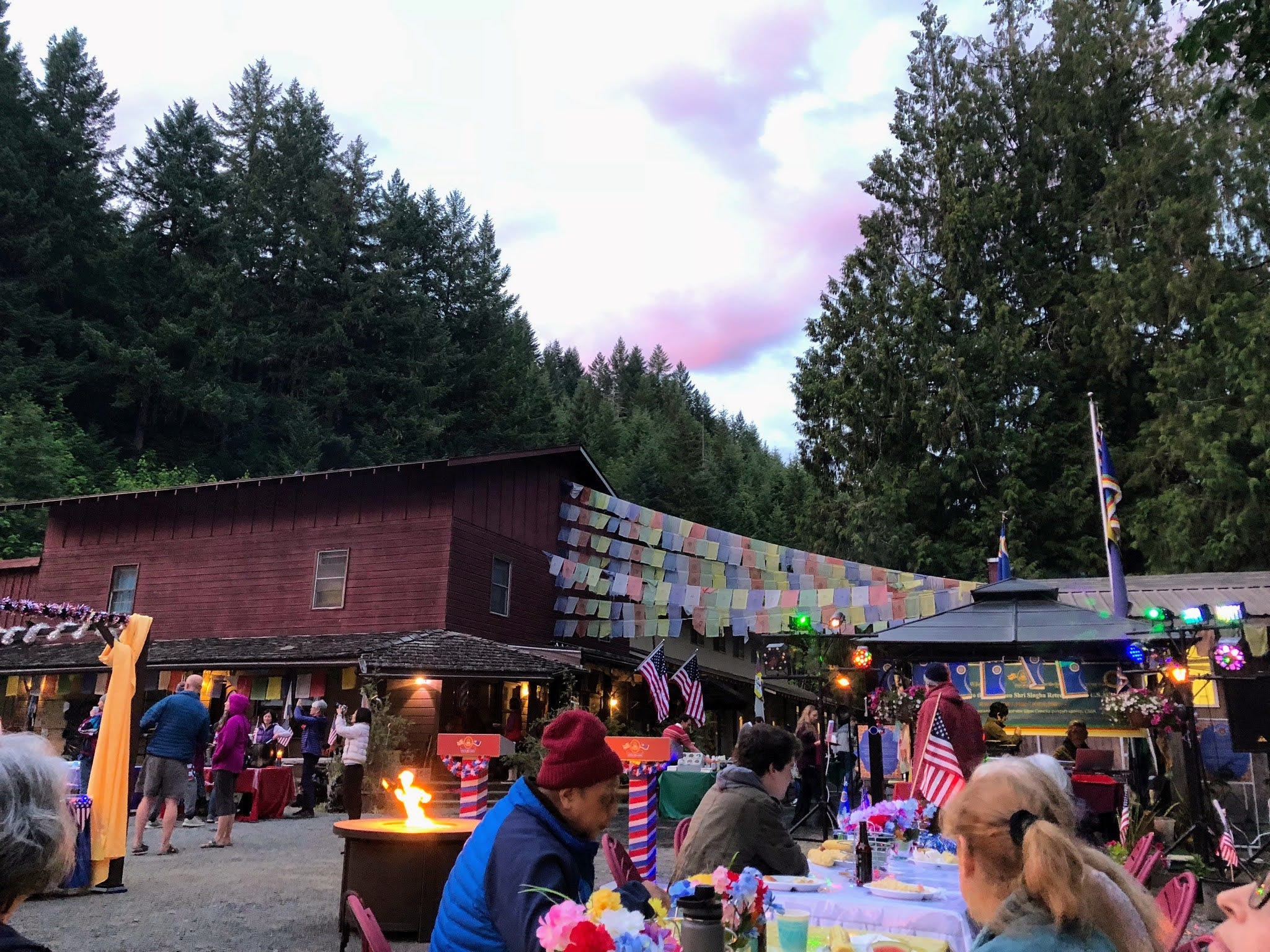
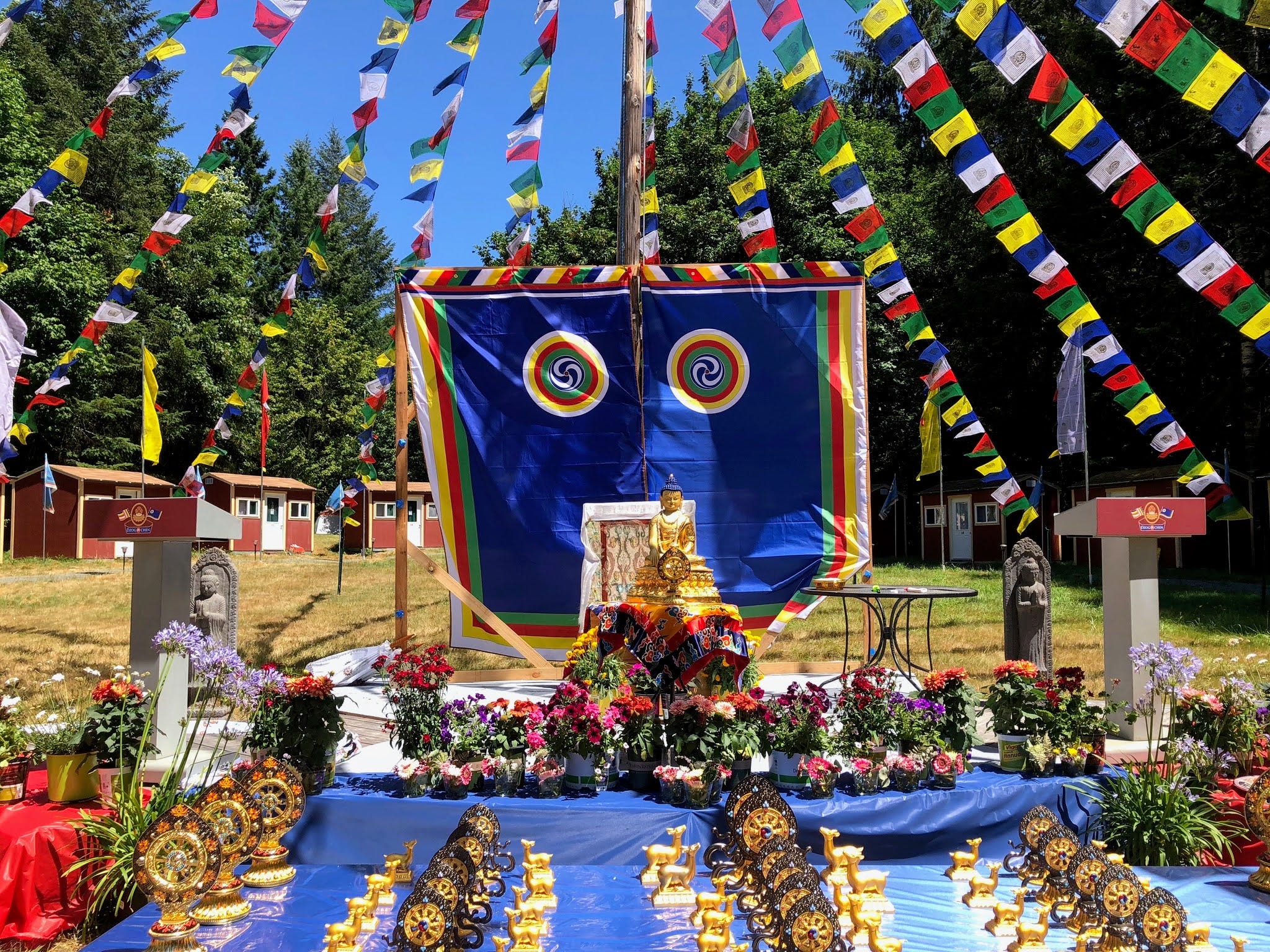
The land outside Veneta, Oregon, was once home to a cowboy theme park where visitors watched scripted gunfights, but by the time Rachel Montgomery arrived at the remote property, the place had calmed into a tranquil Buddhist outpost known as the Dzogchen Retreat Center, or DRC.1
“It’s this beautiful drive and experience to go from Eugene, heading towards the foresty, beachy side of the coast,” Montgomery said. “It’s really remote, really, really rugged, really adventure-feeling to go to an off-grid community.”
Rikkianne Chatfield, a friend she knew from childhood, was working at DRC in 2011 and invited Montgomery out for the Fourth of July. She watched fireworks alongside people dressed in robes. The whole experience was “enchanting,” Montgomery said.
Buddhism was new to her, but its imagery was familiar from hippie scenes and local countercultures: “The way we grow up in the Pacific Northwest, I don’t think any of us are strangers to prayer flags or Buddha statues,” Montgomery said.
She kept coming back, working as a nanny on her breaks from college, taking a class or two. Then, after graduation, she moved to work at DRC full-time.
By the winter of 2013, Montgomery was 21 years old. Her only pay was room and board and one-on-one classes with DRC’s guru, a man named Dzogchen Khenpo Choga Rinpoche, who all the students simply called Choga.
Montgomery soon took vows of devotion to Choga, who was 49.2 He became her root guru. In Vajrayāna or Tantric Buddhism, an esoteric branch of Tibetan Buddhism taught at DRC, a guru acts as a key to unlocking the wisdom of the scriptures. You “give your mind over to another person. And that one person is the locus of control for your life,” Montgomery explained to The Western Edge. “Some people look their whole lives to find a guru.”
Everything Choga did was a mystery to be examined, every word he spoke contained a lesson. The entire world of the retreat center revolved around him; students made his meals, brought him water during lessons. Choga seemed to take a particular liking to Montgomery, and requested her to sit by his side, where they would talk and sing. People told her how special it was to have his attention.
She began to work for Choga more directly, taking on menial cleaning and organizing tasks he gave her. Sometimes, he would lavish Montgomery with kindness; other times, he made cruel comments about her in front of other students. Over time, he began to ask increasingly more invasive questions about her love life, and her menstrual cycle.
But Montgomery had pledged her devotion to him, and when Choga told her he would give her “spiritual empowerments,” she believed him.
Their student-teacher relationship soon became one of subjugation and control. Beginning in September 2013, according to a lawsuit filed in federal court, Choga organized one-on-one “empowerment” sessions with Montgomery that he said would further her spirituality. On more than one occasion, Montgomery alleged, these sessions would culminate in Choga raping her.
On Dec. 12, 2013, according to the lawsuit, Choga instructed Montgomery to drink excessive amounts of alcohol as a part of a community-wide celebration. She alleged she became so intoxicated that she passed out and woke up on the floor of the retreat center’s Dakini Mandala temple. Her pants and underwear were around her ankles, and she had “recollections of a heavy weight of Choga’s body on top of hers.”
When Montgomery found out she was pregnant a month later, she went to Choga, who “confirmed that he had penetrated her in the temple that night,” and told her their child would be an enlightened being, according to the lawsuit.
Even after the rape, Montgomery believed what her guru said. But she did not want a child; she wanted an abortion, which Choga paid for, and asked Montgomery to take a vow of secrecy. She had the procedure, left the retreat center for good and tried to put it behind her.
But around 2018, conversations around the exact kind of relationship Montgomery was in with her guru started to take place as tidal waves of sexual assault allegations surfaced during the #MeToo movement. People in Buddhist communities began to ask questions. How much consent did students really have when pledging devotion to a guru? And what was appropriate behavior by someone with so much spiritual power?
Today, eight years later, Oregon Buddhist organizations continue to search for answers. In more than one case, female students plunged headlong into spiritual communities they perceived as pure and free from the ills of other religious institutions. They pledged devotion to male gurus believed to have near-deity status.
Later, when things went wrong, each successfully sought accountability through the justice system, and received settlements.
But now, some former students want the wider Buddhist community to take action. In two instances, the men who carried out the alleged harm continue to hold power, teach and have stature.
What happened to Rachel Montgomery never left her.
In 2021, she made a phone call to the Lane County Sheriff’s Office and told detectives that the guru of Dzogchen Retreat Center had raped her. But when three detectives arrived at the remote retreat center, staff told the officers that Choga had been in Asia since the start of the COVID-19 pandemic. They “had no idea if or when he ever would return,” according to one detective’s report.
Detectives wrote they planned to suspend the case until Choga came back to the United States, and gave their findings to the Lane County district attorney.
Montgomery, believing she might never see a prosecution, sought a civil lawsuit, which settled in 2025.
Once again, she thought her past with the remote Buddhist retreat was behind her. But Dzogchen Retreat Center quietly added new events to its schedule earlier this year, including a two-day in-person retreat in early June with Choga.
He was back in the country.
****
Sunitha Bhaskaran left her entire life behind to sit at the feet of her guru.
She was 40-years-old and working as an engineer in the Bay Area when she took an interest in Buddhist philosophy and meditation classes, and signed up for a workshop at a local center run by an organization called the Foundation for the Preservation of the Mahayana Tradition, or the FPMT.
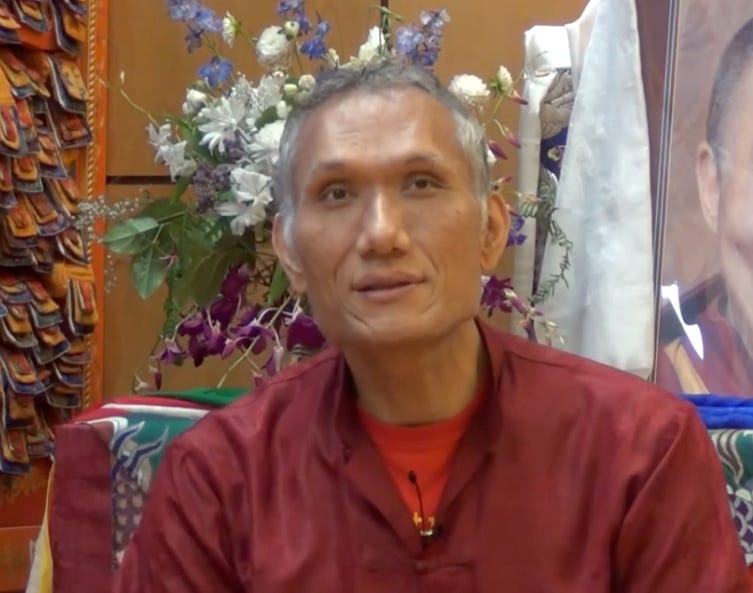
The teacher was highly-revered, a man named Kesang Tuladhar — known to his students as Yangsi Rinpoche.3 “I was an eager student,” Bhaskaran said in a pair of interviews with The Western Edge.
In 2013, she left her job, drove north to Portland and enrolled as a student at Maitripa College, a Tibetan Buddhist school and affiliate of the FPMT. The two organizations share a nondescript building in Southeast Portland with prayer flags hanging in a window.4
At Maitripa College, Bhaskaran steeped herself in the tight-knit community built around Tuladhar, who acted as president and taught classes. “He identifies people who are very devoted,” she said. Devotion earned her a volunteer teaching assistant position. For two years she worked for $500 a month as a bookkeeper. Later she would transcribe Tuladhar’s lectures as his personal archive coordinator.
Bhaskaran became closer to Tuladhar, and they started going to lunch. “He’ll say things like, ‘I want to take care of you.’ I remember one of the things he said to me, ‘You will be my disciple and I will be your root teacher,’” she recalled. Later, he would text Bhaskaran that he was coming to her house. He gave her gifts, and she would cook for him. On weekends, Tuladhar would call and ask her to care for his child.5
Then, he began to rub his body against hers, kiss her, and then they had sex. Tuladhar described it as a spiritual practice, according to Bhaskaran; she said these frequent encounters would often leave her bleeding and bruised.
All the while, they exchanged text messages that they loved each other. But as time passed, the power dynamics at play and the secrecy around their relationship began to confuse and unsettle Bhaskaran.
By then, those exact sorts of power dynamics were being scrutinized within other North American Buddhist communities. In 2018, the Tibetan Buddhist organization Shambhala International was rocked by a series of harrowing stories of sexual violence published by a grassroots project of survivors called Buddhist Project Sunshine. The project gained international media coverage and resulted in the organization’s leader, Sakhong Mipyam, stepping down.
Around the same time, Sogyal Rinpoche, a Buddhist teacher and author of the best-seller The Tibetan Book of Living and Dying, was accused of beating his students.
When asked about the myriad allegations of abuse and violence, the Dalai Lama admitted to reporters that “someone mentioned about a problem of sexual allegations” to him years before, but he had taken no action; the issue was “nothing new,” he said.
By 2021, those conversations reached Maitripa College.
During a meeting that spring, students peppered Tuladhar with questions. They wanted his advice: How were followers supposed to navigate the relationship with a teacher they had pledged devotion to?
“If I’m sitting here thinking ‘OK, so what Rinpoche is saying is that in order to get enlightened, I have to be his devoted disciple. And if he asks me to have sex with him, I have to say yes in order to get enlightened,” one woman said during the meeting, a recording of which was provided to The Western Edge.
“That’s terrifying for most people,” she explained. “How does someone know or feel safe?”
“Slowly I realized there were always red flags,” Sunitha Bhaskaran said. “This person doesn’t genuinely care. I realized that he was just exploiting me.”
Tuladhar seemed unable, or unwilling, to speak directly about the issue. For 40 minutes, he and his students talked past each other: He viewed questions about consent as an opportunity to talk about historical practices in Tantric Buddhism. Female students posed and rephrased questions trying to get a clear answer. Was it OK for teachers to have sex with their students? Are there boundaries on devotion?
“Devotions are not literal,” Tuladhar said, finally, offering his most clear answer. “Did I do everything my teacher said? No.”
The entire conversation disturbed Bhaskaran. Only recently had Tuladhar ceased coming to her home expecting sex.
“Slowly I realized there were always red flags,” Bhaskaran said. “This person doesn’t genuinely care. I realized that he was just exploiting me.”
She wondered if her guru was less an enlightened being, and more a mortal man.6
****
A person bestowed with the honorific “rinpoche” — meaning “precious one” — is believed in Tibetan Buddhism to be the living reincarnation of a beloved teacher. Students at Dzogchen Retreat Center believe Dzogchen Khenpo Choga Rinpoche to be the reincarnation of Gedun Chopel, an early 20th Century Buddhist scholar, and he told stories that he had meditated in a cave for seven years.
Kesang Tuladhar is also believed by his followers to be a reincarnated Buddhist scholar: a story that started when Tuladhar was just a little boy.
In a video from January 1975, a long line of monks followed the 6-year-old Tuladhar up a path toward Kopan Monastery, outside Kathmandu, Nepal. The boy was believed to be the reincarnation of Geshe Ngawang Gendun, a revered Buddhist scholar. That day, he sat on a throne and was given his new name: Yangsi Rinpoche.7
Tuladhar and Choga are a part of a generation of men who brought Buddhism to Europe and the United States, where interest in Eastern religions surged in the late 20th Century.
“In that hippie era, in the 1970s and ’80s, people got interested in Asian religions,” Jan Chozen Bays, the co-abbot at Great Vow Zen Monastery in Clatskanie, Oregon, told The Western Edge. “We really believed that a master who came from Japan or Tibet or India was enlightened. And so we should just do and follow whatever they said.”
Over time, as Bays herself transitioned from student to spiritual teacher, she has observed how much power over their lives people allow teachers to have. Students “just opened up like little flowers about everything that was going on in their lives,” she said.
“Within the Western imagination, Buddhism has really been constructed as a good religion…It’s a product of what we call Orientalism in our field.” — Ann Glieg, professor of religion and cultural studies, University of Central Florida
Two scholars — Ann Gleig, a professor of religion and cultural studies at University of Central Florida, and Eckerd College professor of religious studies Amy Langenberg — have taken a particular interest in the specific power held by spiritual teachers, and are co-authoring a book about abuse in North American Buddhist communities.
In one article, the pair explain how Americans have long treated Buddhism as “a spiritual antidote to the materially advanced but soulless West.”
“Within the Western imagination, Buddhism has really been constructed as a good religion,” Gleig told The Western Edge. “It’s a product of what we call Orientalism in our field.”
That “wider Orientalist framework” meant Westerners often think of gurus as idealized figures. Some exploited those preconceived notions.
“Part of the tantric tradition is that you have to trust your teacher, and you have to see your teacher as like a living Buddha,” Langenberg said, instructing on how these power dynamics are often explained. “Your teacher is gonna ask you to do things that on the surface seem really sketchy or unethical. Like you don’t want to do them, or they seem wrong, but it’s a way of helping you to know your own mind and confront your own mental limitations.”
For some people, having that kind of power over others opens a window of opportunity to push the boundaries of what’s ethical, and get away with it.
****
By 2021, Sunitha Bhaskaran was starting to think of her relationship to the Maitripa College president differently.
One night in August 2021, she sent an email to Namdrol Miranda Adams, the school’s Dean of Education.
“As you know that Yangsi Rinpoche and I were in a relationship for 4 plus years. The relationship was of a sexual nature,” she wrote. “I will categorically say that I have felt emotionally abused and disrespected in many many levels.”
A few hours later, Bhaskaran wrote again. “I beg you to stop covering Rinpoche’s actions.”
When Adams responded, she appeared sympathetic.
“I did not know you were in such a relationship with Yangsi Rinpoche during the past years, and I am very sad to hear that you have been hurt. Please rest assured that I have not and never will do anything to ‘cover this up,’ and I will do anything I can to help and support you,” she wrote.
Adams forwarded the emails to the college’s board of directors, and Maitripa hired a third-party investigator to look into whether Tuladhar had violated the college’s policies. Her name is Carol Merchasin.
Merchasin was a career attorney when she heard about the Shambhala case, in 2018, and offered her services as an independent sexual misconduct investigator.
“I was retired. I was doing this pro bono,” she said. Merchasin believed her investigations would reveal ways institutions could prevent harm, and they would make changes. “But that was wrong for a number of reasons.”
Third party investigations of spiritual communities became an entire second career for Merchasin.
Over time, she began to see a pattern in organizations that had a “guru culture:” leaders with extraordinary power crossing unclear lines with students.
In 2021, Maitripa College hired Merchasin to investigate Bhaskaran’s claims; Merchasin’s findings remain private.
After interviewing both Bhaskaran and Tuladhar, according to an executive summary of her investigation compiled by Maitripa College’s Board of Directors, the board “concluded that the parties had indeed been involved in an ‘undisclosed intimate, sexual relationship, a violation of Maitripa College consensual relationship policy.’” The college board also said no one involved had any intention of hurting anyone else.
Tuladhar denied having a sexual relationship with Bhaskaran, and Maitripa College’s board kept him as president.
Still, what happened continued to eat away at Bhaskaran.
“When you are with a spiritual teacher, you automatically trust the person, and you can be vulnerable,” she said. “You don’t exploit that. So I think he failed.”
In April 2025, Portland attorneys Amber Kinney and Whitney Stark mailed a letter to Maitripa College informing it of Bhaskaran’s intent to file a civil complaint in court against Tuladhar for sexual battery, negligence and aiding sexual harassment. The school settled with Bhaskaran in October 2025, before the complaint reached the court. Two Maitripa College board members involved in the investigation, when reached for comment, declined to speak for this story.8
Maitripa College declined an interview with The Western Edge, but emailed a statement.
“Maitripa College takes seriously its obligations to its students, its community, and the broader public,” it said.
“In its 20 years of history, a single direct complaint has been made to Maitripa College regarding Yangsi Rinpoche. When Maitripa became aware of the complaint, we undertook a formal institutional response, which included retaining independent legal counsel and commissioning an independent investigation conducted by an outside investigator. That process identified a policy violation. The College has been working, and continues to work, to implement appropriate institutional responses and accountability measures. This matter was subsequently resolved and settled through a formal mediated process in 2025, and terms acceptable to all parties were reached and documented.”
In late June, Tuladhar’s photo and bio were still listed on the College’s “about” page.
“Yangsi Rinpoche is currently on sabbatical,” it read.
****
Rachel Montgomery had also continued to struggle with what happened to her at Dzogchen Retreat Center.
In 2023, with Choga still out of the country, Montgomery filed her civil lawsuit in federal court against him, the Dzogchen Shri Singha Foundation and several officers on the organization’s board of directors alleging sexual battery, negligence and sex trafficking. Carol Merchasin acted as one of her attorneys.
Merchasin argued that guru devotion puts so much power into one person’s hands to control their students’ lives. And, in the wrong hands, that can undermine the consent that’s necessary for a sexual relationship.
Organizations that rely on “the charismatic leader who is infallible, who must be obeyed, you cannot disagree,” she said. “You have set up a power dynamic that can lead… to a lot of coercion.”
After Montgomery’s lawsuit was publicized in an article by The Daily Beast (with the headline “Guru Accused of Mystical Baby Plot in U.S. Rape Case”), word spread quickly through the tight-knit community.
“I think everybody was in some amount of shock,” recalled Devan Anderson, a board member and former teacher who was a part of the organization for 13 years. “It was literally, like, unbelievable.”9
But behind the scenes, she saw people who wanted to stall any criminal investigation into Choga.
“The [board] officers, and other close students, were basically like, ‘We need to keep you from coming back into the country so you don’t get served with these papers,’” Anderson said.
The lawsuit forced her to think harder about the organization she’d spent so much of her life building. Over time, she and other people who’d helped the organization along for so many years began to say things out loud about DRC that had been previously unspeakable.
What seemed like a retreat center of love and light was, for many, a place of fear. Anderson said for a place that preaches spiritual ideas that would help the whole world, Choga yells at the largely-female population of students, and “rules with an iron fist.”
Carrie Ure also started reckoning with what she had seen over decades of involvement with the organization. Ure was named as a defendant in Montgomery’s civil lawsuit; she told The Western Edge that the moment she was served papers naming her as a defendant was the moment she left the organization. She officially resigned in the fall of 2023. Later, all of the defendants in the case were dismissed.
Ure described Choga as “a showman” with tons of charisma, who lights up every room he enters. But at retreats, his temper would come out.
“I saw him hitting people,” Ure said. When Ure was a new student attending a retreat, she recalled a man asked if Choga would allow the group a bathroom break during a session. In response, the guru started screaming at the man. Ure burst into tears.
Choga called her up to his throne at the front of the room. “He looked at me, pointed his finger at me and he said, ‘If you are afraid of me, I will hunt you down.’”
“That could have been the end for me,” Ure said, thinking back on it. But she said after Choga’s outburst, the students were given a break and they walked around the property together. “A couple of the other students came around me and they said, ‘Now you’re initiated, basically. … He does that because he loves us. He knows what’s best for us. He knows us better than we know ourselves.’”
After news spread of Rachel Montgomery’s lawsuit, Ure said she witnessed Choga lashing out at Chatfield — Montgomery’s childhood friend, who still worked at the retreat center — punishing her in front of other students with hundreds of “prostrations,” similar to a push-up.
“She’d be doing hundreds of them. He’d make her just do it, just keep doing it, while we went on with whatever we were doing,” Ure said. Once, Ure was also in the room when he poured a full pint of beer over Chatfield’s head. Chatfield later joined as a co-plaintiff in the lawsuit against Choga; she did not respond to an emailed request for comment.
When The Western Edge requested an interview with Dzogchen Khenpo Choga Rinpoche, an attorney responded. “Out of respect for the confidentiality of the parties involved, neither the organization nor its representatives will comment further.”10
That confidentiality did not stop the organization from posting a 3,081-word essay on the retreat center’s website, titled “Decisive Announcement.”11 The organization wrote it had been targeted by an “increasingly volatile social climate and the rise of litigious actions targeting spiritual communities,” and that online disinformation continues to circulate about it.
“In order to protect our organization and Sangha from danger, we paused our public events and activities for more than two years. All this has led to a considerable loss of income for our Foundation and associated organizations,” the statement reads.
“We now officially announce that this case is completely closed and legally resolved.”
Levi McKenny, public information officer for the Lane County Sheriff’s department, confirmed its investigation of Choga, and Montgomery and Chatfield’s accusations, had been forwarded to the district attorney’s office. As for the sheriff’s office, “our case on the matter is suspended,” he said.
When reached by phone, Lane County District Attorney Christopher Parosa said his office never filed the case because, at the time of the investigation, there was an “insufficiency of evidence.” Parosa said that might have meant the sheriff’s office was unable to interview Choga directly.
“I will definitely put this back on the sheriff’s radar,” he said, when informed of Choga’s reemergence in Oregon.
For her part, Montgomery wasn’t surprised the retreat center welcomed Choga back. She now describes her time at DRC as “a cult Buddhist experience.”
“If Lane County, or the state of Oregon, wasn’t going to make it clear that they were uninterested in having this predator in their community, which you could only do that with criminal prosecution, then that person would feel essentially welcome to come back.”
“I do think they misunderstand the severity of what they’re inviting,” she said.
At least once, it was also a film set. The 1995 western Grizzly Mountain, which is shelved in the “Family” section at Portland’s Movie Madness, was filmed on the property. The description is as follows: “Present-day Portland suburbs kids Dylan and Nicole go on the camping trip with their family, and when they enter a mysterious cave in the mountains, they’re transported back in time to 1870, where they meet mountain man Jeremiah.”
Breaking vows to a guru would mean risking going to a Buddhist version of hell.
Pronounced RIN-poh-shay.
This spring, a new lawsuit emerged in which a woman claimed she was sexually abused as a child at FPMT centers in Vermont and North Carolina in 2008. In a post to its website, the FPMT said “While the parties are continuing to negotiate a settlement agreement in which we do not admit any liability, any agreement reached will be confidential and will not permit us to make any further statements about the dispute or the validity or invalidity of the allegations set forth in the complaint.”
Not all rinpoches take vows of celibacy. In interviews, The Western Edge learned that Tuladhar and Namdrol Miranda Adams, the Dean of Education at Maitripa College, had previously lived as monastics at Deer Park Buddhist Center in Oregon, Wisconsin before moving to Portland and starting Maitripa College. Property records show that Adams and Tuladhar own a house together in Southeast Portland, and Bhaskaran and another former student confirmed that they live together. “He is someone who can be in the world and get married and have children and all that,” a Buddhist chaplain who spoke to The Western Edge on the condition of anonymity said. “And yet that doesn’t mean that he can sleep with students.”
In June, Willamette Week first reported allegations that Tuladhar had used his position as president of Maitripa College to obtain sex from Bhaskaran over a period of years.
In Tibetan Buddhism, visions guide devotees to search for the reincarnations of revered lamas, or teachers, in newly-born children.
The terms of the settlement are confidential.
Anderson was not an officer on the board, and was not named as a defendant in the lawsuit.
In 2025, the parties reached a resolution of Montgomery and Chatfield’s lawsuit, the terms of which are confidential.
For scale, this article is 3,904 words.
Whew. Tough read, but excellent reporting.
Thank you so much for covering this critical issue. As a longtime Buddhist I am so disturbed at the level and scale of harm that is perpetrated inside many Buddhist communities. And there are very few mechanisms for holding these "gurus" accountable. So coverage like this is key to at least warning people of the harm happening inside these groups.